
STUDIO ABG - FAENZA (RA)
Some diagnoses give years back
Sleep is an essential biological function for health.
Nocturnal awakenings, the sensation of non-restorative sleep, or at times habitual snoring — often reported by a partner — may be manifestations of sleep-disordered breathing, a group of conditions encompassing simple snoring and obstructive sleep apnoea syndrome (OSA).
When present, sleep apnoea can be associated with documented systemic consequences: impaired vigilance, reduced cognitive performance, increased cardiovascular and metabolic risk, reduced immune defences, possible increased risk of cognitive decline, and increased risk of accidents — particularly when driving. In children, sleep-disordered breathing can interfere with neurocognitive and behavioural development.
What happens during sleep can significantly influence health over time.
✦
The first sleep apnoea and snoring fconsultation
Before your consultation, you will be asked to complete a number of validated clinical questionnaires — including the Epworth Sleepiness Scale, the Berlin Questionnaire, and other tools used to assess the muscular and articular conditions of the temporomandibular joint.
These instruments allow us to define your individual risk profile and to guide the consultation in a more targeted and appropriate way.
The questionnaires will be sent to you by email prior to your appointment. If you prefer, you are welcome to arrive at the practice 20 minutes early to complete them.
Documentation to bring with you If you have already undergone specialist examinations or consultations, we ask you to bring all available documentation. In particular:
- Polygraphy or polysomnography, if already performed
- ENT evaluation
- Panoramic radiograph or other dental X-rays
- Any reports from pulmonology or neurology consultations
- A list of current medications
Complete documentation allows for a more precise and targeted clinical assessment.
Read more
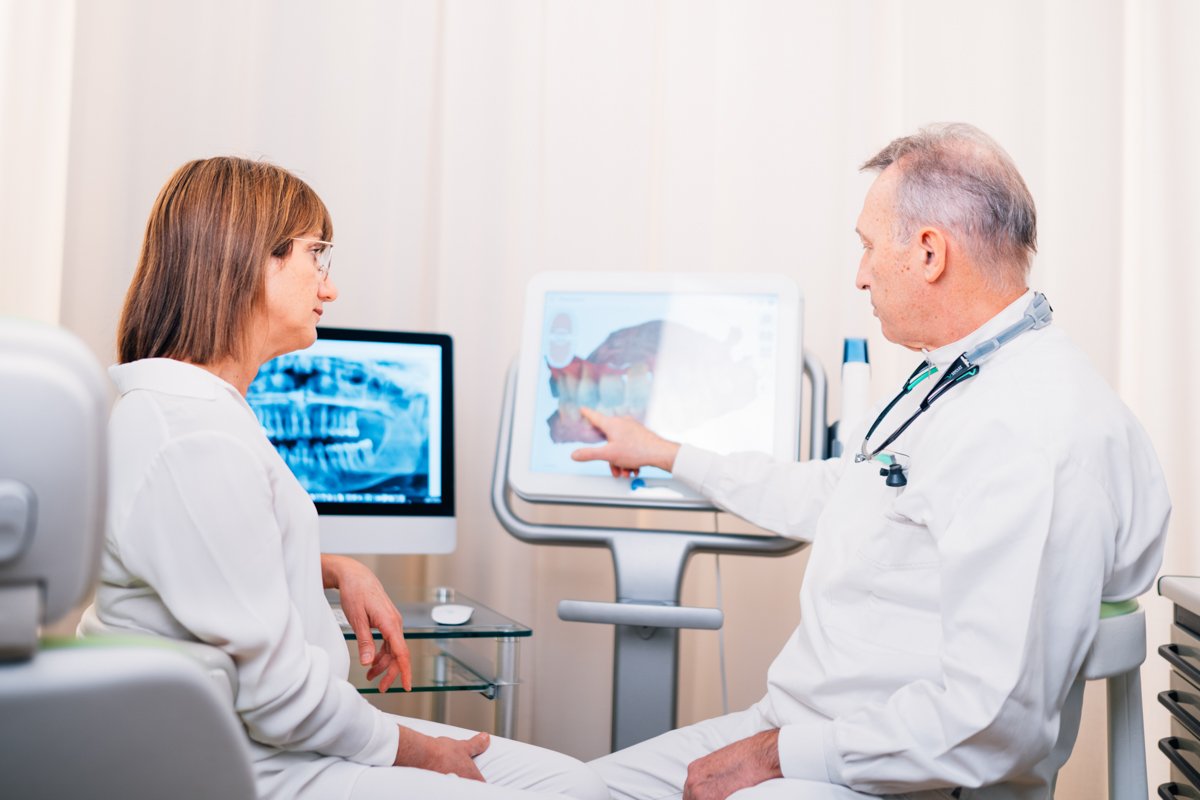
During the consultation During the consultation, we collect your full clinical history and assess:
- Reported symptoms — snoring, nocturnal awakenings, daytime sleepiness, morning headaches
- The morphology of the oral and facial structures — temporomandibular joint, masticatory muscles, tongue size, palate shape, mandibular position, nasal patency
- The presence of modifiable risk factors — body weight, evening habits, sleep posture
Nocturnal pulse oximetry
In many cases, we prescribe home nocturnal pulse oximetry — a non-invasive test that you can perform comfortably at home.
The device records blood oxygen saturation and heart rate throughout the night, allowing us to identify possible desaturation episodes consistent with sleep apnoea.
Collaboration with other specialists When the clinical picture requires it, the diagnostic pathway is integrated through collaboration with pulmonologists and ENT specialists, with whom Studio ABG maintains established working relationships.
In these cases, we guide the patient towards the most appropriate investigations — such as home polygraphy or laboratory polysomnography — in order to reach a complete and reliable diagnosis.
After the consultation — what to expect At the end of the consultation, we will explain our clinical assessment in a clear and accessible way.
We will outline whether further investigations are needed, which pathway we consider most appropriate for your case — and why.
The outcome of the consultation does not always lead to a treatment. In many cases, the indication may be different — or no active treatment may be necessary.
You will have all the time you need to ask questions. We will answer them with care.
One of the most common conditions in the world
Sleep apnoea is one of the most widespread and underdiagnosed conditions: evidence indicates that over 90% of patients have never received a diagnosis.
This figure underscores an essential principle: diagnosis is the most important step in the entire clinical pathway.
At Studio ABG in Faenza, sleep-disordered breathing is approached through a structured clinical framework, based on three principles:
- Accurate diagnosis — before any other consideration
- Therapeutic appropriateness — the right treatment for the right patient, not the available treatment
- Multidisciplinary integration — in collaboration with sleep medicine specialists, pulmonologists and ENT specialists
The diagnostic outcome does not always lead to an orthodontic treatment. In many cases, the indication may be different — such as positive pressure ventilation (CPAP) — or no treatment may be necessary at all.
The goal is not to treat.
It is to establish with precision whether treatment is indicated — and which is the most appropriate for the individual patient.
A national reference
for sleep disorders
Prof. Giulio Alessandri Bonetti is Director of the first Italian university Master’s programme in Sleep Disorders for Dentists, at the University of Bologna: an academic chair that recognises, at university level, the excellence of a path built over time.
Prof. Alessandri Bonetti and Dr Anna Alessandri Bonetti conduct scientific research on sleep-disordered breathing at national and international level, with publications and presentations at specialist congresses.
Our approach is multidisciplinary by definition: we build diagnostic and therapeutic pathways in collaboration with pulmonologists, ENT specialists, paediatricians and sleep neurologists — evidence-based and centred on the individual patient.
Some diagnoses come at night — and change everything.

FREQUENTLY ASKED QUESTIONS
Everything you want
to know
What is sleep apnoea and how common is it?
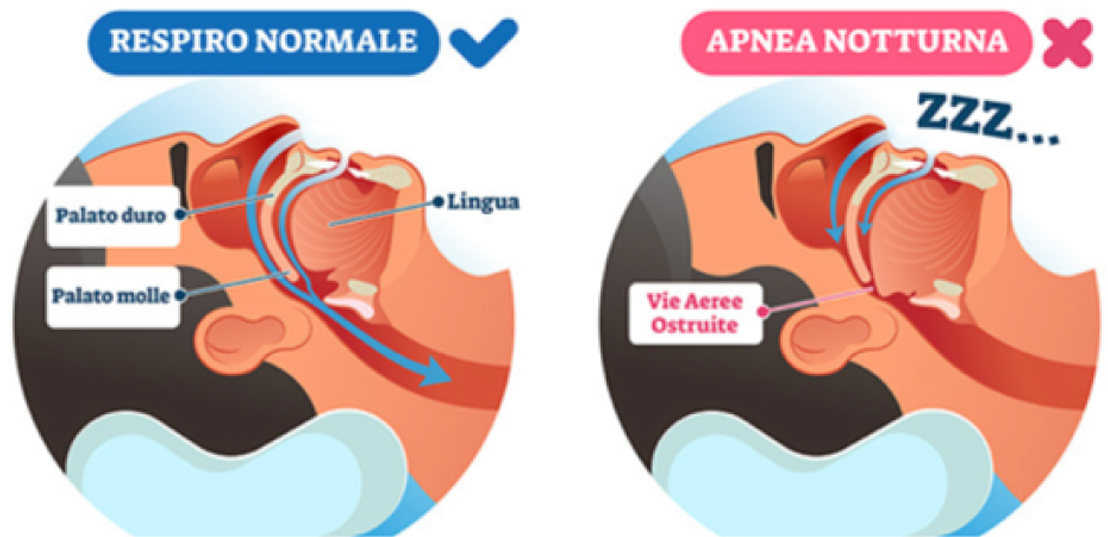
Sleep apnoea (OSA) consists of repeated episodes of upper airway obstruction during sleep, resulting in reduced or interrupted airflow. It is one of the most widespread and underdiagnosed conditions: a study conducted on an adult population using full polysomnography found OSA in over 80% of men and 60% of women. More than 90% of patients have never received a correct diagnosis.
What are the symptoms of sleep apnoea in adults?
- Habitual, loud snoring — often reported by a partner
- Non-restorative sleep — waking tired even after many hours of sleep
- Excessive daytime sleepiness
- Waking with a sensation of choking or breathlessness
- Morning headaches
- Difficulty concentrating, memory problems, irritability
- Nocturia (waking at night to urinate)
What are the symptoms of sleep apnoea in children?
- Frequent snoring or noisy breathing during sleep
- Restless sleep, abnormal positions (head hyperextended, mouth open)
- Nocturnal enuresis
- Attention and concentration difficulties at school
- Hyperactivity — often mistaken for ADHD
- Slowed growth, alterations in dentofacial development
Children with sleep-disordered breathing rarely present with daytime sleepiness. They tend instead towards hyperactivity — which makes diagnosis harder and often delayed. A child who snores regularly always deserves a specialist assessment.
Is it possible to have sleep apnoea without being aware of it?
Yes. Sleep apnoea can be asymptomatic for a long time. In many cases the only sign is snoring reported by a partner. Even patients with severe OSA may not experience daytime sleepiness — which makes instrumental diagnosis indispensable.
How is sleep apnoea diagnosed?
Diagnosis requires a structured pathway: validated clinical questionnaires (Epworth Sleepiness Scale, Berlin Questionnaire), home nocturnal pulse oximetry, and — when indicated — polygraphy or polysomnography. The choice of tests depends on the clinical picture. Being overweight is a relevant risk factor, but it is not a diagnostic criterion: clinically significant sleep apnoea can be present in normal-weight or underweight patients too.
What is the AHI index and how is it interpreted?
The AHI (Apnoea-Hypopnoea Index) indicates the average number of apnoeas and hypopnoeas per hour of sleep and is used to define the severity of the disorder. It is not sufficient alone: the duration of events and the extent of desaturations must also be considered.
Do all patients with sleep apnoea need to be treated?
No. Not all patients require active treatment. In some cases, clinical monitoring or non-invasive behavioural interventions are appropriate. The decision depends on the diagnosis, the severity of the disorder, and the individual clinical context.
What is the MAD oral appliance and when is it indicated?
The MAD (Mandibular Advancement Device) is a custom-made oral appliance that advances the mandible during sleep, widening the upper airway. It is the first-choice treatment for mild to moderate OSA and for patients who cannot tolerate CPAP. It requires a documented diagnosis, personalisation and clinical follow-up over time.
Is the oral appliance an alternative to CPAP?
Only in selected patients. CPAP remains the gold standard for moderate to severe forms. The MAD is an appropriate alternative for mild to moderate forms or when CPAP is not tolerated. The choice must always follow an accurate diagnosis.
Do anti-snoring devices bought online work?
In most cases, no. Devices sold online are not customised and are not part of a clinical pathway. Even when they reduce snoring, they can cause uncontrolled dental movements. Efficacy and safety depend on indication, personalisation and clinical supervision by a specialist.
How is sleep apnoea treated in children?
In children the most frequent causes are adenoid and/or tonsillar hypertrophy and morphological alterations of the palate. Orthodontic-orthopaedic treatment — when necessary combined with ENT surgery — offers the best results. Intervening during growth offers therapeutic possibilities no longer available in adulthood.
Why is diagnosis more important than treatment?
Because only an accurate diagnosis makes it possible to establish whether treatment is necessary and which is the most appropriate. Without diagnosis, any therapeutic choice is approximation. This is true of sleep apnoea more than almost any other condition: symptoms are often absent, the risk is real, and the consequences of inappropriate treatment can be significant.