STUDIO ABG - FAENZA (RA)
Excellence in Orthodontics in Faenza — your smile, designed around you
At Studio ABG, we combine clinical expertisea, academic research and advanced digital technologies within an approach grounded in scientific evidence and continuous innovation.
Each treatment is guided by a precise objective: achieving optimal alignment with accuracy, aesthetics and individual balance.
For us, orthodontics goes beyond the smile.
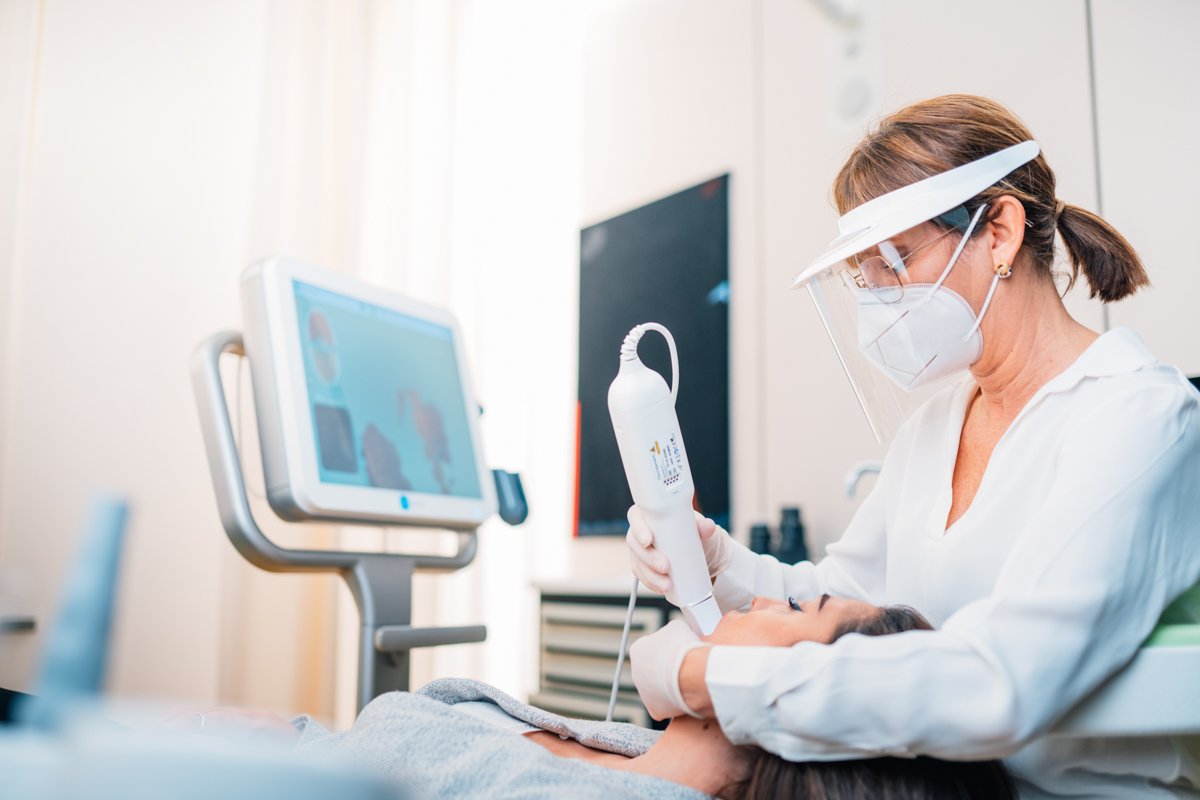
We analyse the relationship between teeth, temporomandibular joints (TMJ) and facial structure. The integration of human expertise and advanced digital technologies contributes to extremely accurate diagnoses and designs.
✦
The first orthodontic consultation
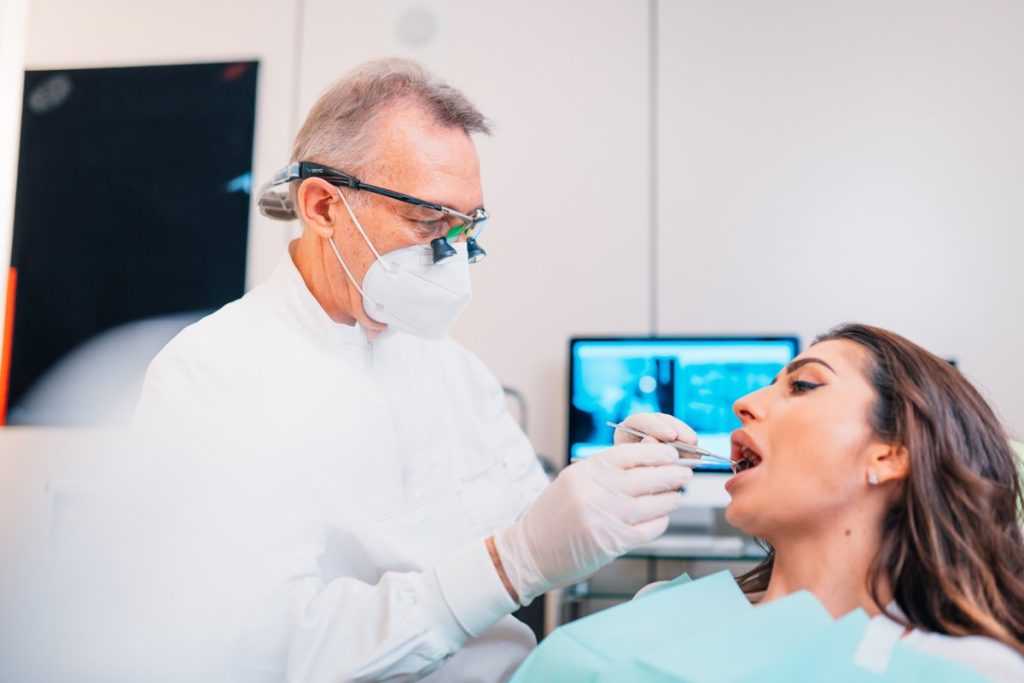
The first consultation is one of the most important moments in the treatment journey.
It is here that we take responsibility for establishing a diagnosis and providing a clinical assessment of your case.
During the consultation, we evaluate:
- the likely natural evolution of your condition
- whether future problems can be prevented with simple measures, sometimes not even orthodontic
- whether resolution is possible without intervention
- if treatment is indicated, when the most appropriate time to begin would be
If orthodontic treatment is recommended, we will assess together the most appropriate approach to achieve the best possible result.
Read more
Every decision takes into account your expectations, facial structure, smile and occlusion, with the aim of achieving a balance between aesthetics and function.
The ability to optimise treatment timing, while maintaining the highest quality of outcome, reflects our clinical expertise and experience.
The first consultation is a specialist appointment entirely dedicated to you.
The time we spend together — whether to establish a complete diagnosis, to advise that no treatment is needed, or to consider further diagnostic investigations — always represents a clear clinical responsibility.
Recommending not to treat also has value: it requires the same level of expertise and attention as planning a complex treatment.
Further evaluation
In selected cases, additional investigations may be required — such as MRI, temporomandibular joint imaging, electromyographic assessment of bruxism or cardio-respiratory monitoring — to confirm the diagnostic hypothesis.
We will explain our clinical assessment as clearly as possible.
We believe that understanding your condition is an essential part of the treatment journey.
If you have any questions, we will be happy to answer them — regarding your clinical situation, treatment options, or our sterilisation and hygiene protocols.
Transparency is an integral part of how we work.
Discover our appliances
Types of orthodontic appliances
The choice of appliance is never standard. It depends on the diagnosis, the clinical objectives and the individual characteristics of each patient.
It is our responsibility to propose the most appropriate and effective solution for each specific case.
01
Fixed Vestibular Appliances
Fixed vestibular appliances allow precise three-dimensional control of tooth movement, making it possible to resolve even the most complex malocclusions.
Suitable for children, adolescents and adults, they consist of:
- Brackets bonded to the outer surface of the teeth
- Archwires that guide tooth movement
- Metal or elastic ligatures — available in a range of colours
02
Fixed Lingual Appliances
Lingual appliances deliver the same clinical results as vestibular appliances, with the advantage of being completely concealed inside the mouth.
Suitable for adolescents and adults, they use brackets positioned on the inner surface of the teeth. To minimise discomfort to the tongue, we use gold brackets individually constructed for each tooth and each patient.
03
Invisalign Aligners
Invisalign aligners are removable, aesthetic and discreet devices that allow orthodontic treatment to be managed with great flexibility — particularly suitable for patients who live or work outside Faenza, or who prefer greater autonomy between appointments.
Suitable for children, adolescents and adults, provided the patient actively collaborates with the treatment by wearing the aligners consistently and following clinical instructions.
Their effectiveness depends decisively on planning. Invisalign planning is not an automatic step — it is an active clinical phase that requires direct oversight by the clinician.
In our approach, the planning of tooth movements is developed with meticulous precision and attention to detail, because it is at this stage that the quality, predictability and timing of the result are defined.
Invisalign treatment is the result of continuous collaboration between clinical planning, patient commitment and ongoing monitoring. The experience gained through numerous cases allows us to manage even complex situations with a high degree of control.
In certain clinical conditions, however, Invisalign aligners may not be the most appropriate choice.
The result is visible. The planning that makes it possible is not.
04
Orthopaedic Appliances
Orthopaedic appliances act at the skeletal level, modifying the shape and position of the upper jaw and/or the mandible. They are used during growth to guide the development of the bone bases.
Their effectiveness depends strictly on the growth phase: they can only be used during development, at specific times that vary from patient to patient. For this reason, they represent a fundamental part of paediatric orthodontics.
Identifying the correct moment for intervention is an essential part of the diagnosis — and therefore of the result. Not a secondary detail.
When to intervene with orthopaedic appliances
In cases of a prognathic mandible or a retruded upper jaw (Class III malocclusion), the most appropriate period is generally between 5 and 9 years of age.
In cases of a retruded mandible (Class II malocclusion), the ideal moment coincides with the individual growth peak, generally between 10 and 13 years of age.
Intervening too early can slow progress and compromise patient cooperation. Intervening too late means the necessary growth is no longer available.
Recognising this moment in each individual patient is a specific clinical skill — not something that can be standardised.
Once the growth phase has passed, skeletal corrections require integration with orthognathic surgery.
The result is built at the right moment. Not before. Not after.
Every growth has its time. Recognising it is part of the care.
FREQUENTLY ASKED QUESTIONS
Everything you want
to know
How do I know if I need orthodontic treatment?
There is no one-size-fits-all answer: certain signs may suggest the need for an assessment, but only an accurate diagnosis can determine whether and when treatment is actually recommended.
Some signs to look out for:
- crowded or rotated teeth
- difficulty getting your teeth to fit together
- difficulty closing your lips or habitually breathing through your mouth
- a chin that is set back or protrudes in relation to the rest of the face
- a bite that seems ‘crooked’ or asymmetrical
However, none of these signs, on its own, automatically means that treatment is needed: sometimes they are normal variations, whilst at other times they indicate a deeper functional problem (postural, respiratory or joint-related) that needs to be investigated before any dental intervention is undertaken.
The first appointment is a diagnostic consultation: together, we analyse your specific situation using the appropriate tools, and we clearly explain whether treatment is necessary, beneficial or not a priority. Not all patients need treatment.
At what age should a first orthodontic visit be carried out?
There is no single age that applies to everyone. In some cases, an evaluation around 5–6 years of age is recommended, especially when skeletal discrepancies of the upper jaw and/or mandible are present.
A particularly important check is performed around the age of 9. At this age, if the upper permanent canines — which will erupt some years later — are not clinically palpable, a panoramic radiograph is recommended to assess whether they are following the correct eruption path or whether an altered inclination is predisposing them to bony impaction.
If the radiographic examination confirms this, targeted extractions of deciduous teeth allow the canines to erupt correctly, with a success rate of approximately 95%. This avoids considerably more complex orthodontic treatment later on.
This is what we define as true prevention.
Prof. Giulio Alessandri Bonetti conducted research on this subject that was awarded Best Research of 2013 by the American Association of Orthodontists.
Can adults undergo orthodontic treatment?
Yes. Orthodontic treatment can be carried out at any age, provided that the supporting tissues — gums and bone — are healthy. There is no age limit. We have patients who began treatment at almost 80 years of age — with excellent results.
What is the best appliance?
There is no universally best appliance. The choice depends on the diagnosis, the clinical objectives and the individual characteristics of the patient. It is our responsibility to propose the most appropriate solution for each specific case.
Are Invisalign aligners always indicated?
No. Aligners are an effective solution in many cases, but not all. The indication depends on the diagnosis, the treatment objectives and the patient’s commitment to cooperation. In some malocclusions, a fixed appliance allows a degree of control over tooth movement that aligners alone cannot always guarantee. In other cases, aligners are the most appropriate choice. In selected situations, a combined approach can be adopted to achieve the optimal result.
How long does orthodontic treatment take?
Duration varies depending on the complexity of the case, patient cooperation and individual response to treatment. There are no standard durations — every treatment plan is individual. Careful planning allows treatment time to be kept to a minimum, without compromising the quality of the result.
Is orthodontic treatment painful?
Some patients report mild discomfort in the first few days or after activations — a sensation of pressure that is the physiological response to tooth movement. The intensity varies from patient to patient. In all cases it is temporary and tends to resolve quickly, and is not comparable to acute pain.
Is retention necessary after treatment?
Yes. The retention phase is essential to maintain results over time. Retention is not optional: it is an integral part of treatment.
Are orthodontic results stable?
Absolute stability does not exist — not even in those who have never undergone orthodontic treatment. Teeth move throughout life. For this reason, clinical follow-up does not end with the completion of active treatment.
Can orthodontic treatment be accelerated?
What most influences treatment duration is accurate planning and patient cooperation. No universally effective methods exist for accelerating treatment. It is also worth knowing that certain medications can slow tooth movement: information we always gather during the diagnostic phase.
Should children always be treated early?
No. The timing of intervention depends on the type of problem. In some cases — such as Class III malocclusions — early intervention is essential. In others, it is preferable to wait for the most favourable moment. Intervening too early can be as ineffective as intervening too late. Many situations improve or resolve spontaneously.
Is diagnosis really that important?
Yes. Diagnosis is the most important step in the entire clinical pathway: treatment choice, timing and outcome all depend on it. An incorrect diagnosis not only prevents the desired results from being achieved — it can cause iatrogenic harm. For this reason, we invest in diagnosis before anything else.