
STUDIO ABG - FAENZA (RA)
Morning headaches, jaw pain, muscle tension, joint sounds and bruxism: symptoms that require careful recognition, classification and rigorous evaluation.
In gnathology, diagnostic quality is decisive.
An experienced specialist knows when to intervene and, just as importantly, when not to.
Not everything requires active clinical treatment. We intervene only when it is truly necessary.
In many cases, therapy is based on targeted behavioural guidance, requiring the patient’s active and informed participation.
This is not about not intervening — it is about choosing the most appropriate approach.

✦
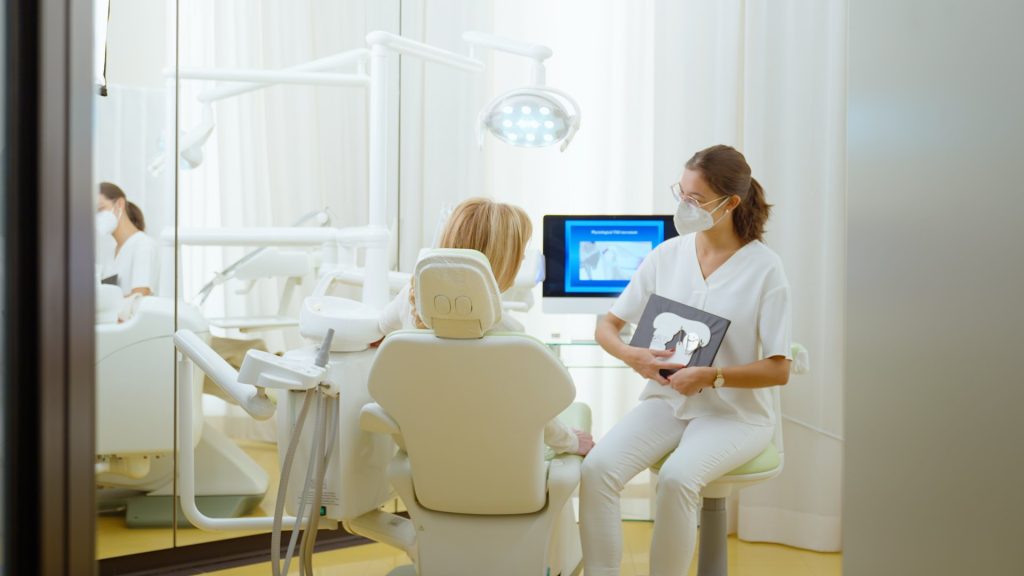
The first consultation lasts 60-75 minutes and is structured to be comprehensive from the outset.
Before the appointment
You will receive by email a series of anamnestic questionnaires specific to temporomandibular disorders — the same ones required by the diagnostic protocols of the international scientific community. Completing them carefully allows us to conduct the consultation in a more targeted and appropriate way.
If you prefer, you are welcome to arrive 20 minutes before your appointment to fill them in at the practice.
During the consultation
We collect your clinical history in depth. We assess mandibular movements, the presence of sounds or limitations of the temporomandibular joint, and any articular, muscular or referred pain.
In some cases — when necessary and not as a matter of routine — we may request additional investigations: MRI of the TMJ, electromyographic assessment of bruxism, cardio-respiratory monitoring, targeted radiographic examinations.
After the assessment
We explain our clinical findings in a clear and thorough manner. We believe that understanding one’s own condition is an integral part of the therapeutic process. You will have all the time you need to ask questions and receive precise answers.
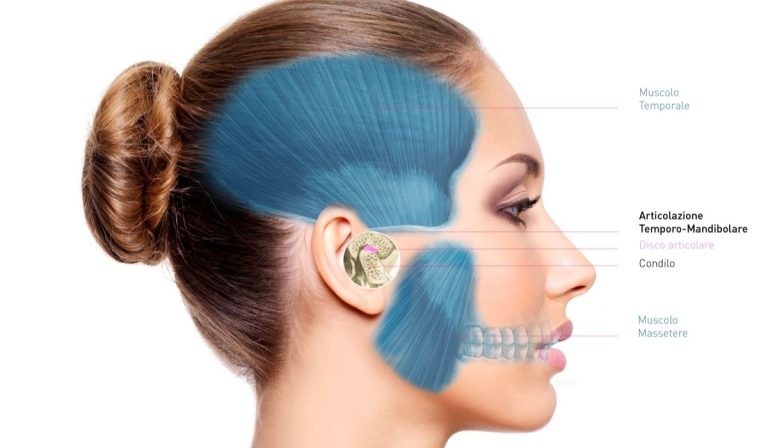
The temporomandibular joint (TMJ) connects the mandible to the skull and enables all jaw movements.
It is one of the most complex joints in the human body: it is present on both the right and left sides and functions in a coordinated manner, combining rotational and translational movements.
The surrounding muscles allow essential functions we perform every day — such as chewing, swallowing, speaking and smiling — through highly precise neuromuscular coordination.
Within the joint, there is a fibrocartilaginous disc that acts as a cushion between the bony surfaces.
When this disc shifts or deforms, joint sounds — such as clicking or crepitus — may occur during jaw movements.
These sounds do not always indicate a pathological condition: specialist assessment is essential to distinguish what requires treatment from what can simply be monitored.
Due to its complexity, the temporomandibular joint lies at the core of gnathology — the discipline that studies its balance and function.
Alterations of this system may present as pain, headaches, tinnitus (often intermittent), a sensation of ear fullness, or limitations in jaw movement.
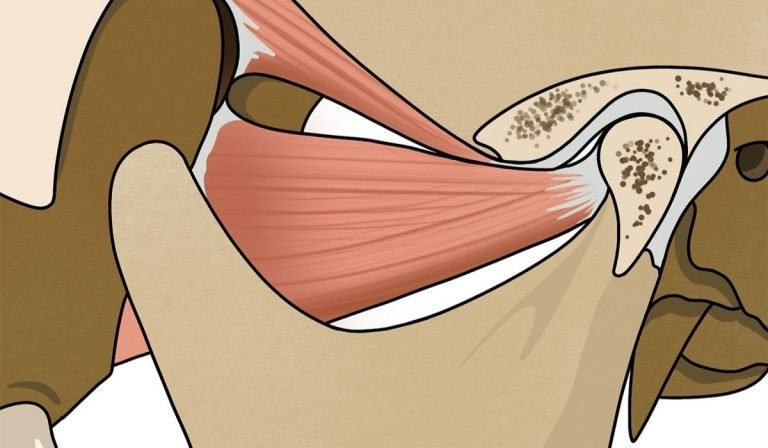
Temporomandibular disorders (TMD) are a group of conditions affecting the temporomandibular joint and its associated structures: the mandible, temporal bone, articular disc, ligaments, muscles and nerves.
These components work in close coordination: when one of them does not function correctly, the balance of the entire system may be compromised.
TMD are one of the leading causes of musculoskeletal pain, second only to back pain.
Despite their prevalence, they are often underestimated or diagnosed late, partly because symptoms can vary considerably from patient to patient and do not always present as localised joint pain.
These are heterogeneous conditions: some predominantly involve the masticatory muscles, others the articular disc, and others the bony structures.
This variability makes differential diagnosis complex and requires thorough specialist assessment.
The causes are often multiple and interconnected — structural, muscular and psychosocial — and rarely attributable to a single factor.
For this reason, accurate clinical evaluation is an essential prerequisite for any therapeutic decision.
The most common symptoms include:
Not all temporomandibular disorders require active treatment.
In some cases, the most appropriate management consists of monitoring over time, combined with targeted behavioural guidance.
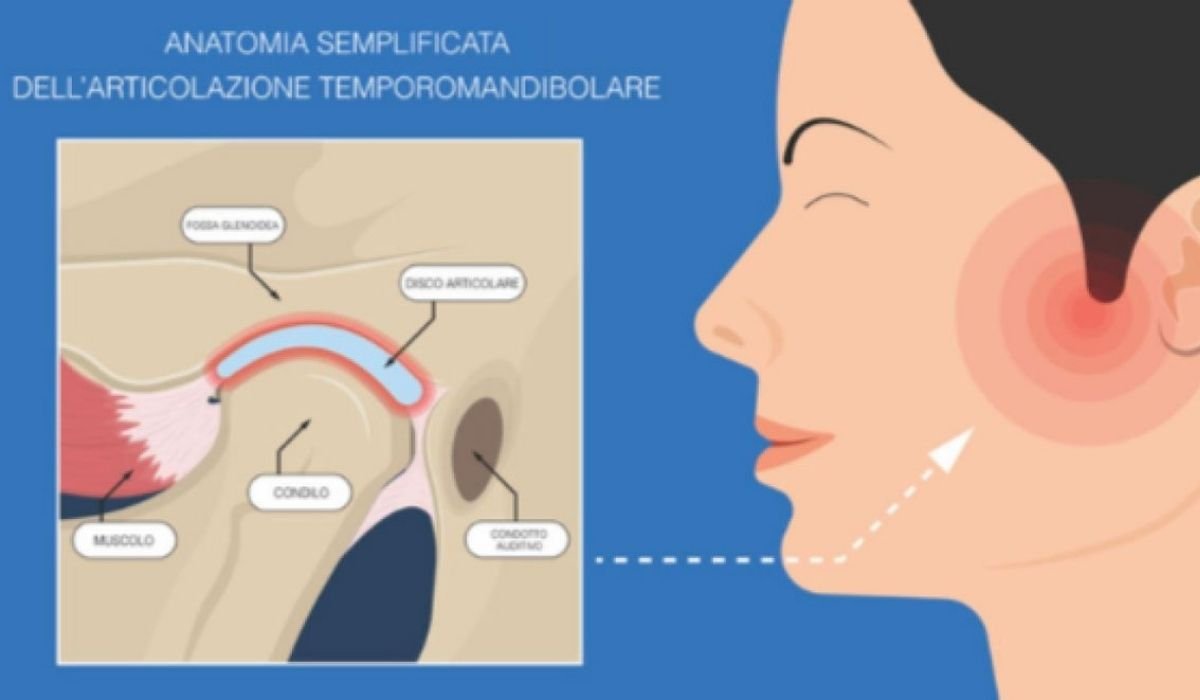
Temporomandibular disorders can present with a wide range of symptoms — not always easy to attribute to their underlying cause.
Recurring headaches, ear pain, facial tension: symptoms that patients often attribute to other conditions, but which may originate in the temporomandibular joint or the masticatory muscles.
Recognising these signs is the first step towards an accurate assessment.
The most common symptoms include:
An important consideration
Not all of these symptoms necessarily indicate a temporomandibular disorder requiring treatment.
Some — such as joint sounds in the absence of pain — may fall within para-physiological conditions and require no intervention.
This is precisely why a specialist assessment is essential:
not to treat everything, but to distinguish with precision what requires therapy from what can simply be monitored.
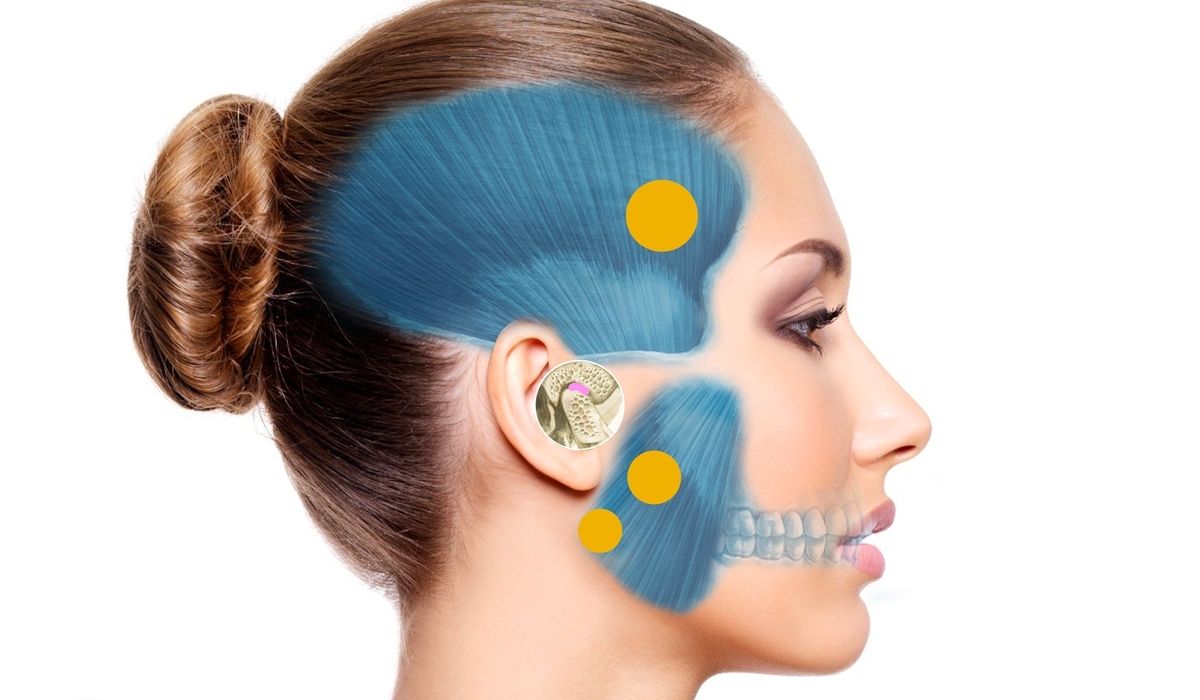
The treatment of temporomandibular disorders cannot be separated from an accurate diagnosis.
There is no single therapeutic approach that is suitable for every patient: treatment selection depends on the nature of the condition, its severity, and the individual characteristics of the patient.
For this reason, the quality of the initial clinical assessment is decisive — far more than the treatment itself.
The main therapeutic approaches
Treatments for temporomandibular disorders, supported by international scientific evidence, include:
Behavioural therapy
Modification of parafunctional habits, education on the mandibular rest position, and stress management strategies.
Physiotherapy
In most cases self-administered, with specific exercises for the masticatory muscles and the joint.
Pharmacological therapy
Anti-inflammatory drugs, muscle relaxants, or other medications, when clinically indicated.
Muscle anaesthetic infiltrations
Local anaesthetic injections into the masticatory muscles, used for both diagnostic and therapeutic purposes in cases of muscular pain.
Occlusal splint
A removable device designed to reduce joint and muscular load, particularly during sleep.
Arthrocentesis
A minimally invasive procedure indicated in selected cases of joint pathology.
Surgery
Reserved for rare cases, when all conservative approaches have proven insufficient.
A key clarification
There is no scientific basis for considering orthodontic treatment as a therapy for temporomandibular disorders.
Despite this, such recommendations are still frequently made — in the absence of evidence supporting their effectiveness.
Similarly, irreversible occlusal treatments — such as full occlusal reconstruction — are not supported by current scientific literature as a solution for TMD.
Our approach is based exclusively on what international research has validated.
Every therapeutic decision stems from a precise diagnosis — not from standardised protocols or beliefs unsupported by evidence.
FREQUENTLY ASKED QUESTIONS
The causes of temporomandibular disorders are often multiple and interconnected. They rarely depend on a single factor: in most cases, different elements coexist — traumatic, muscular, behavioural and psychosocial.
Traumatic factors Trauma is one of the most common causes.
It can be divided into:
These include:
Prolonged physical or emotional stress can lead to continuous contraction of the masticatory muscles. This results in muscular overload
A key clarification
Dental malocclusion — that is, teeth that are not perfectly aligned — is not a cause of temporomandibular disorders.
This is one of the most common misconceptions, yet it is not supported by current scientific evidence. Treating occlusion with the aim of resolving TMD is, in most cases, an approach without clinical foundation.
Prevention of temporomandibular disorders is based on a fundamental principle: reducing overload on the temporomandibular joint and the masticatory muscles over time.
These are not complex interventions.
In many cases, modifying certain daily habits — often unconscious — can make a significant difference.
Learning the mandibular rest position
One of the most widespread — and most harmful — habits is keeping the teeth in contact during the day, even in the absence of chewing.
In the rest position:
This position, although seemingly simple, is often difficult to maintain in the presence of chronic muscle tension or stress.
Eliminating parafunctions
Parafunctions are repetitive habits that place strain on the joint outside its physiological role.
The most common include:
Managing stress
Psychophysical stress is one of the main factors contributing to tension in the masticatory muscles.
Recognising moments of increased tension — and addressing them with targeted relaxation strategies — can significantly reduce the load on the joint.
A key clarification
Prevention plays a real, but limited role.
Not all temporomandibular disorders are preventable, and not all the habits described are sufficient to avoid the onset of a condition requiring specialist assessment.
According to current scientific knowledge, orthodontic treatment cannot be considered a preventive factor for temporomandibular disorders.
Despite this, the promise of preventing or resolving TMD through orthodontic or occlusal treatments remains widespread — and is not supported by available scientific evidence.
Our approach is based exclusively on what international research has validated.
Not on what is convenient to propose.
Bruxism is a rhythmic involuntary activity of the jaw muscles. Contrary to popular belief, it does not consist solely of grinding the teeth and does not occur exclusively during sleep.
Daytime and/or nocturnal
Bruxism can occur during the day, during sleep, or at both times.
It can present in two forms:
Dynamic — grinding of the teeth against each other, often perceived as a noise
Static — prolonged contraction of the masticatory muscles, generally with dental contact, silent and often unrecognised
Nocturnal bruxism is characterised by brief but high-intensity episodes. Daytime bruxism, on the other hand, can manifest with much longer episodes — and for this reason may be clinically even more relevant in terms of muscular and articular load over time.
A fundamental clarification
The international scientific community has clearly established that bruxism is not a pathology and is not caused by the teeth.
It may be associated with the presence of nocturnal apnoea — with which it shares neurobiological mechanisms that are still under investigation.
In children it is particularly frequent, and it is hypothesised that it may play a physiological role in the development of the temporomandibular joint and in facilitating the resolution of sleep apnoea episodes.
Understanding what bruxism really is — and what it is not — is the first step towards avoiding unnecessary or, worse, harmful treatments.
What are the causes of bruxism?
The causes of bruxism are multiple and vary according to age and context.
It is rarely due to a single factor: in most cases, elements of different nature coexist.
In children, bruxism is very common and is associated with the maturation of the central nervous system.
It is hypothesised that it may play a physiological role in the development of the temporomandibular joint and in facilitating the resolution of sleep apnoea events.
In adults, the most frequently associated factors include:
What are the consequences of bruxism?
In most cases, bruxism does not produce significant consequences.
When present, they depend on the frequency and intensity of the activity, individual susceptibility, and the presence of aggravating factors — such as a particularly acidic oral environment, for example in cases of gastroesophageal reflux.
The most common consequences include:
A key clarification
The presence of tooth wear is not, in itself, sufficient to diagnose active bruxism.
Wear facets may be the result of past activity — not necessarily present at the time of assessment.
Tooth enamel, once worn, does not regenerate: the wear observable today may date back many years.
Not all symptoms related to the temporomandibular joint or bruxism require treatment.
In many cases, an assessment is useful precisely to rule out the need for intervention.
It is advisable to consult a specialist when:
A specialist assessment makes it possible to distinguish, with precision, what requires treatment from what can simply be monitored over time.
The most important choice is not finding the best specialist to perform a treatment, but one who can determine whether the treatment is truly necessary — and, when it is, deliver it in the most appropriate way.
Per fornire le migliori esperienze, utilizziamo tecnologie come i cookie per memorizzare e/o accedere alle informazioni del dispositivo. Il consenso a queste tecnologie ci permetterà di elaborare dati come il comportamento di navigazione o ID unici su questo sito. Non acconsentire o ritirare il consenso può influire negativamente su alcune caratteristiche e funzioni.